The short version
For most dogs on most trails, a harness is the better primary piece of gear. A collar still has a job — it should carry your dog’s ID — but for leash control, comfort, and safety on uneven ground, the harness wins. The reasoning comes down to where leash force lands on your dog’s body.
Where the force goes
This is the core difference. A collar puts every pull, lunge, and sudden stop directly on the neck — the trachea, the thyroid area, and the blood vessels and nerves that run there. A harness spreads that same force across the chest and shoulders, which are broad and muscular and built to take load. That is why veterinarians routinely recommend harnesses for dogs that pull and for small dogs, whose necks are more easily injured by collar pressure. On a hike, where a dog may lunge after wildlife or slip on a rock and jerk against the leash, that difference matters more than it does on a sidewalk.
What a harness adds on the trail
Beyond spreading force, a hiking harness gives you things a collar cannot:
- A grab handle. Many trail harnesses include a reinforced handle you can use to lift your dog over a log, steady them on a scramble, or hold them at a crossing. That is hard to overstate on technical terrain.
- Escape resistance. A correctly fitted harness is much harder for a dog to back out of than a collar is to slip over a narrow skull.
- Multiple leash points. Back and front attachment points let you change leverage — front clip to reduce pulling, back clip for a settled dog or a hands-free belt.
When a collar still makes sense
A collar is the right place for your dog’s ID tag, registration, and contact information, and it should be on your dog whenever you are out. Some owners of well-trained, loose-leash dogs also prefer a flat collar in easy terrain. But “collar versus harness” is usually the wrong frame: the practical answer is often both — a harness for control and lifting, with a flat collar carrying ID underneath.
One trade-off to know
A back-clip harness can make pulling feel comfortable, which is precisely why that design is used for pulling sports. If pulling is a problem, a front-clip or no-pull harness reduces leverage. On a hike, most owners accept the harness trade-off in exchange for the control, comfort, and safety it adds — and keep a collar on for ID either way.
Frequently asked questions
Is a harness or collar better for hiking with a dog?
For most dogs on trail, a harness is the better choice. It distributes leash pressure across the chest and shoulders rather than concentrating it on the neck and trachea, gives you something to grab if you need to lift or steady your dog, and is harder for a dog to back out of than a collar.
Why is a harness gentler on a dog's neck than a collar?
A collar puts any pull or lunge directly on the neck, windpipe, and the delicate structures around it. A harness redirects that force to the broader, more muscular chest and shoulder area. Veterinarians commonly recommend harnesses for dogs that pull and for small dogs whose necks are more easily injured.
When is a collar better than a harness for hiking?
A collar still makes sense for carrying ID and registration tags at all times, and some owners prefer a flat collar on a loose-leash, well-trained dog in low-risk terrain. A collar can also be a reasonable backup ID layer worn alongside a harness rather than instead of one.
Do harnesses encourage pulling?
Some harnesses with the back attachment point can make pulling feel comfortable for a dog (which is exactly why they are used for sledding and skijoring). A front-clip harness or dedicated no-pull harness reduces pulling leverage; on a hike, the trade-off is usually worth the control and comfort a harness gives.
Should my dog wear a collar and a harness at the same time?
Many hikers do exactly that: a harness for leash control and lifting, with a flat collar carrying ID and contact tags underneath. If you double up, make sure neither can catch on brush and that the leash is clipped to the harness, not the collar.
Related gear
Ruffwear
$179.99Ruffwear Ridgeline Harness: Materials, Fit & Alternatives
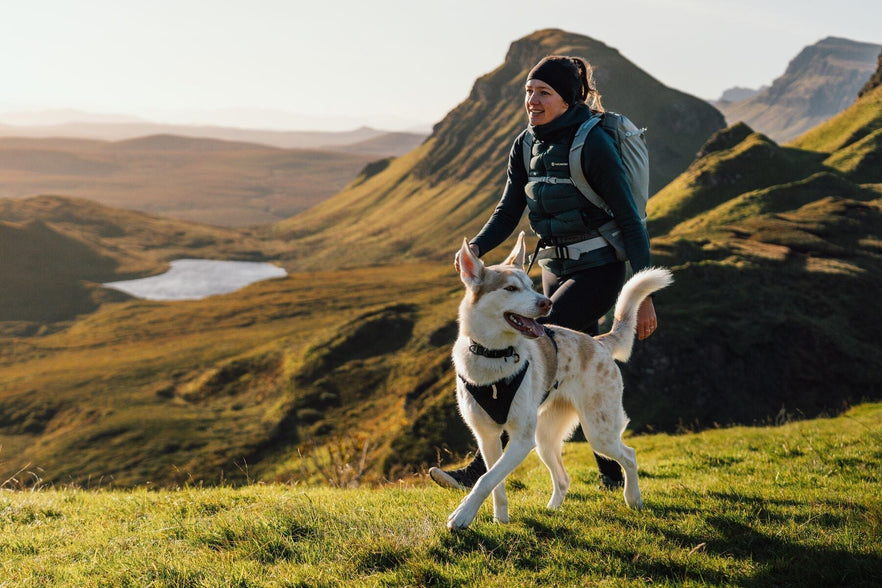
The Ruffwear Ridgeline is presented by Ruffwear and its Amazon listing as a low-profile, supportive harness aimed at hiking, trail, and water-based adventures. Key construction highlights are an X-Pac RX30 shell that Ruffwear describes as 100% waterproof, lightweight, and pliable; reflective polyester webbing; four Fidlock magnetic V-buckles for one-hand fastening; an integrated handle and six points of adjustment; and three leash attachment points including an anodized 6061-T6 aluminum V-ring on the back. The harness is available in torso sizes from XXS (13 in and up) through XL. It is not strength-rated for climbing.
Ruffwear
$59.99Ruffwear Front Range Everyday Dog Harness — Research Review
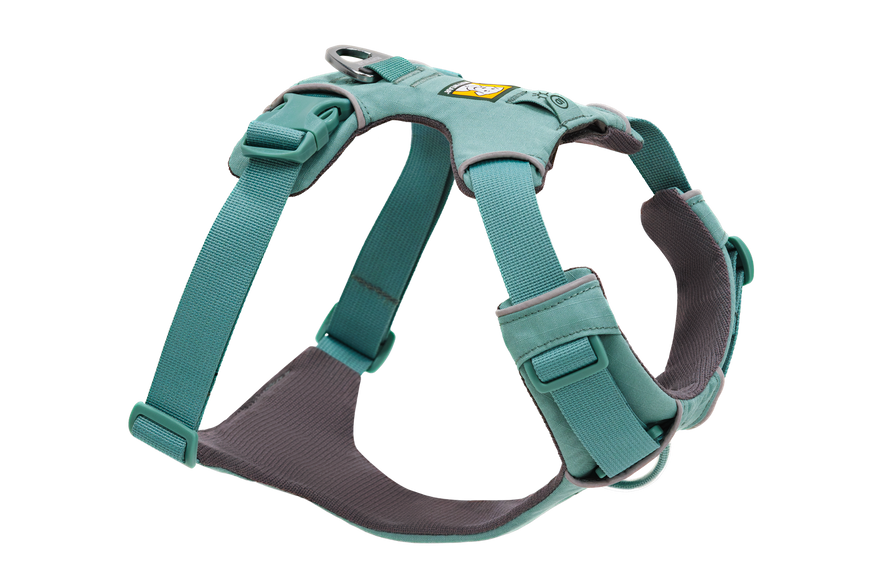
The Ruffwear Front Range is positioned by the manufacturer as an everyday harness for walking and training. It combines a bluesign-approved 300D recycled polyester ripstop shell and foam padding with four points of adjustment and two leash-attachment options (an aluminum back V-ring and a reinforced chest webbing loop). Ruffwear notes the harness is not designed or strength-rated for technical lifting or climbing and does not include an integrated lift handle.
Ruffwear
$79.99Ruffwear Web Master Harness — research review
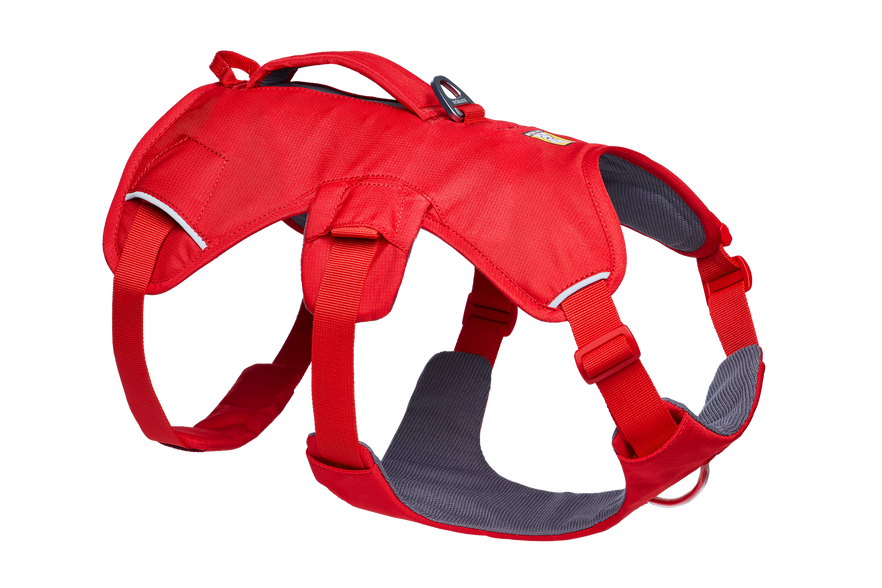
The Ruffwear Web Master is a foam-padded support harness with a padded chest panel, five points of adjustment, and an integrated reinforced padded lift handle. It is presented by the manufacturer and retailers as intended for hiking, scrambling, mobility assistance, and was originally designed for search-and-rescue dogs. Newer versions add a neck buckle for easier on/off. The harness is not strength-rated for climbing or technical lowering; Ruffwear identifies the Doubleback as its strength-rated alternative.
Ruffwear
$49.99Ruffwear Knot-a-Leash — climbing-inspired rope leash (research review)
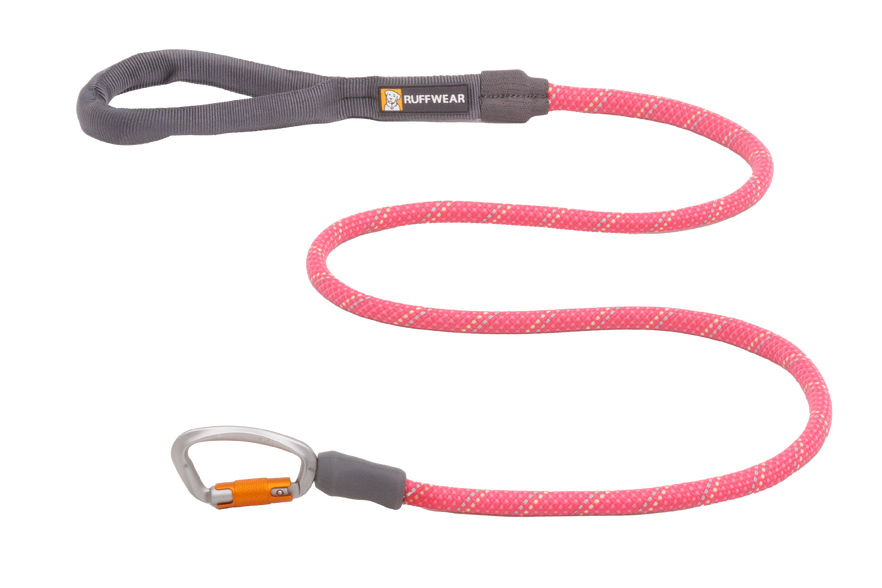
The Ruffwear Knot-a-Leash is a climbing-inspired, 5 ft rope leash offered in two rope diameters (7 mm small, 11 mm large). According to Ruffwear, it pairs a reflective polypropylene kernmantle rope (core made from repurposed waste yarns) with a soft polyester tubular webbing handle and an anodized 6061-T6 tri-action auto-locking, swiveling carabiner. The manufacturer positions it for everyday walking, hiking, and adventure travel and notes the carabiner’s weight can swing on a slack lead and may be uncomfortable clipped to a collar — Ruffwear prefers use with a harness.
Sources & research
Read our research methodology and editorial standards →
- Veterinary Walking and restraint gear for dogs (AVMA pet care)
- Manufacturer Ruffwear Dog Harnesses Collection