Why measuring beats guessing
Harness sizing is not standardized across brands. A “medium” in one harness is not a medium in another, and a wrong guess means a harness that chafes at the armpits, rides up into the throat, or — for escape-prone dogs — comes off entirely when they back out of it. Two minutes with a tape measure prevents returns and, more importantly, a harness your dog quietly hates.
The one measurement that matters most: girth
Girth is the circumference around the widest part of your dog’s ribcage, just behind the front legs. Almost every harness sizing chart is built on girth first, so this is the number to get right.
To measure it:
- Have your dog stand normally on a flat surface (standing, not sitting or lying).
- Wrap a soft measuring tape around the ribcage at its widest point, just behind the front legs.
- Keep the tape snug but not compressing the fur or skin.
- Record to the nearest half inch.
Repeat once or twice — dogs squirm, and a second measurement catches a bad first read.
Secondary measurements
Some brands also ask for:
- Neck circumference — around the base of the neck where the collar sits, for harnesses with a fitted neck opening.
- Body length — from the base of the neck to the base of the tail, less common but used by some step-in and pack harnesses.
Check the specific brand’s chart; girth alone is enough for most.
Then confirm the fit on the dog
Measurements get you to the right size; a fit check confirms it works on your particular dog. Put the harness on and verify:
- Two fingers under every strap. You should be able to slip two fingers flat between the strap and your dog — snug enough that it cannot shift, loose enough not to pinch.
- Nothing at the throat or shoulders. The front chest panel should sit across the chest, not press up into the throat or restrict the shoulder blades when your dog walks.
- No twisting, no armpit rub. Watch your dog move a few steps. The harness should not rotate or shift side to side, and there should be no rubbing at the armpits where chafing starts.
A note on escape-prone dogs
If your dog is a known backer-outer, fit is a safety issue, not a comfort one. A harness that fits loose at the neck lets a dog slip free by walking backward out of it. Escape-proof designs add a third strap behind the ribs that prevents this — but only when that rear strap is sized correctly to your dog’s girth. Measure, then double-check that rear strap can’t be cleared.
Frequently asked questions
What measurements do I need for a dog harness?
The most important is girth — the circumference around the widest part of your dog's ribcage, just behind the front legs. Most harness sizing charts are built on girth first. Neck circumference and body length are secondary measurements some brands also ask for.
How do I measure my dog's girth?
Have your dog stand normally. Wrap a soft measuring tape around the ribcage at its widest point, just behind the front legs, keeping the tape snug but not tight. Record to the nearest half inch. If your dog is between sizes, the brand's chart usually tells you whether to size up or down.
Should I size up or down if my dog is between harness sizes?
Follow the brand's chart, but a useful default is to size up for growing or broad-chested dogs so the straps are not at their maximum extension, and to size down only if the dog is at the very top of the smaller size and fully grown. A harness maxed out on its straps is a poor fit.
How do I know a harness fits correctly?
Check three things: you can slip two fingers under every strap (snug but not pinching), the harness sits so the front chest panel does not press into the throat or shoulders, and it cannot be twisted. Then watch your dog move — no chafing at the armpits and no shifting side to side.
Why does harness fit matter for escape-prone dogs?
A loose harness lets a dog back out of it — a common way escape-prone dogs get free. Escape-proof designs add a third strap behind the ribs, but even those only work when sized correctly to the dog's actual girth.
Related gear
Ruffwear
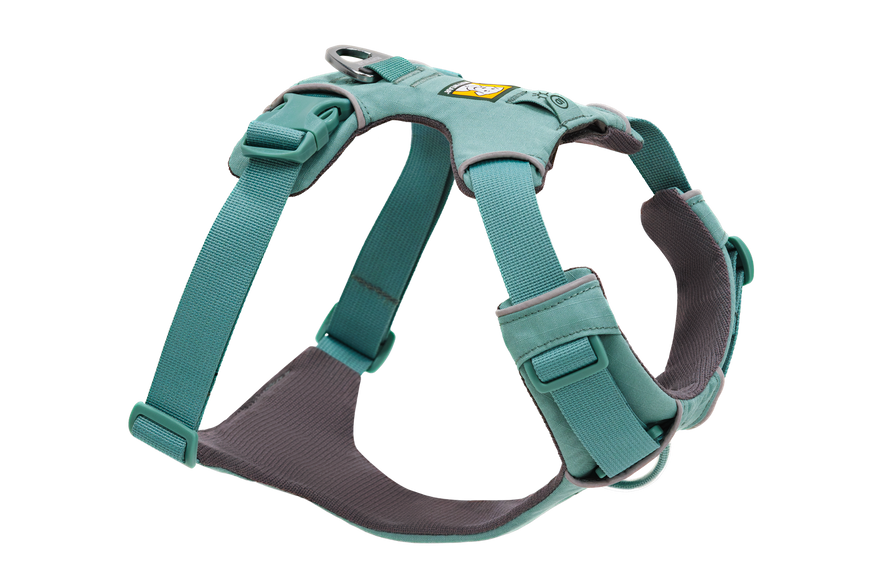
$59.99Ruffwear Front Range Everyday Dog Harness — Research Review
The Ruffwear Front Range is positioned by the manufacturer as an everyday harness for walking and training. It combines a bluesign-approved 300D recycled polyester ripstop shell and foam padding with four points of adjustment and two leash-attachment options (an aluminum back V-ring and a reinforced chest webbing loop). Ruffwear notes the harness is not designed or strength-rated for technical lifting or climbing and does not include an integrated lift handle.
Ruffwear
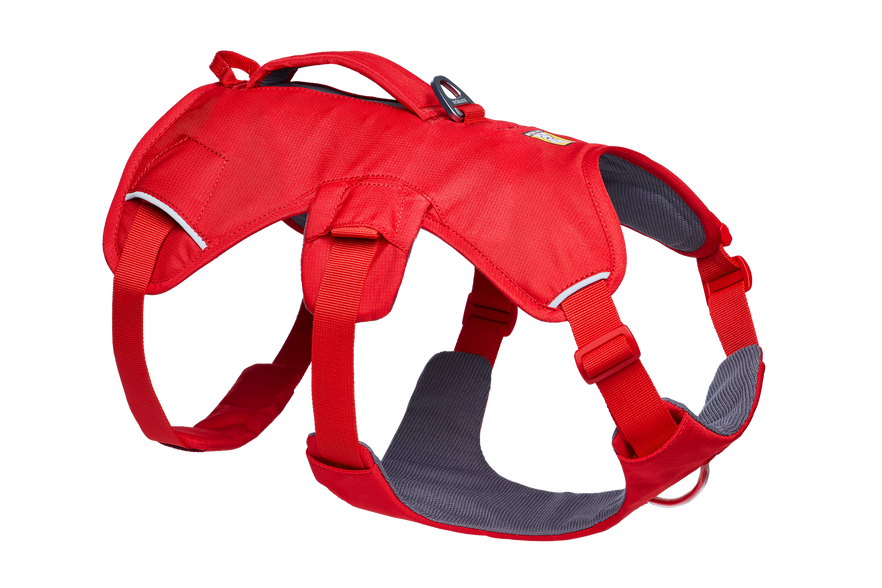
$79.99Ruffwear Web Master Harness — research review
The Ruffwear Web Master is a foam-padded support harness with a padded chest panel, five points of adjustment, and an integrated reinforced padded lift handle. It is presented by the manufacturer and retailers as intended for hiking, scrambling, mobility assistance, and was originally designed for search-and-rescue dogs. Newer versions add a neck buckle for easier on/off. The harness is not strength-rated for climbing or technical lowering; Ruffwear identifies the Doubleback as its strength-rated alternative.
Ruffwear
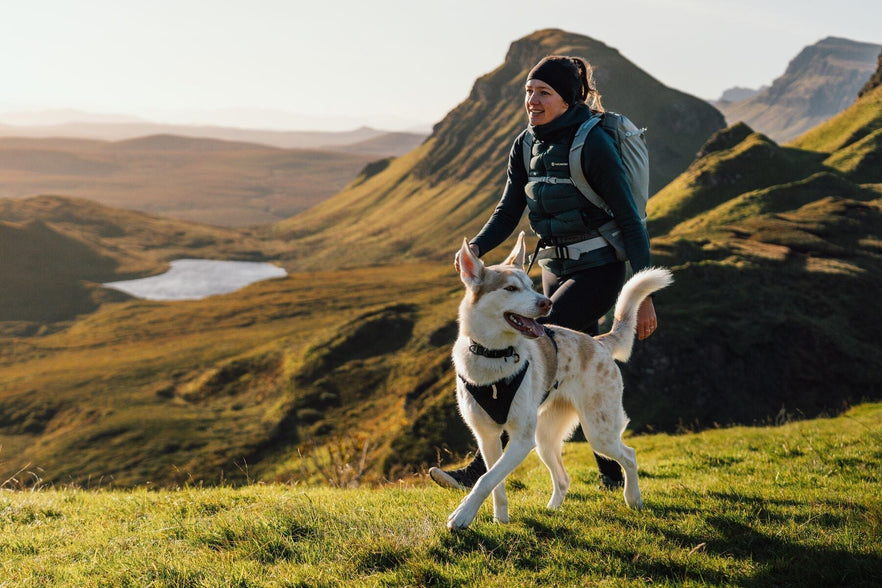
$179.99Ruffwear Ridgeline Harness: Materials, Fit & Alternatives
The Ruffwear Ridgeline is presented by Ruffwear and its Amazon listing as a low-profile, supportive harness aimed at hiking, trail, and water-based adventures. Key construction highlights are an X-Pac RX30 shell that Ruffwear describes as 100% waterproof, lightweight, and pliable; reflective polyester webbing; four Fidlock magnetic V-buckles for one-hand fastening; an integrated handle and six points of adjustment; and three leash attachment points including an anodized 6061-T6 aluminum V-ring on the back. The harness is available in torso sizes from XXS (13 in and up) through XL. It is not strength-rated for climbing.
Ruffwear
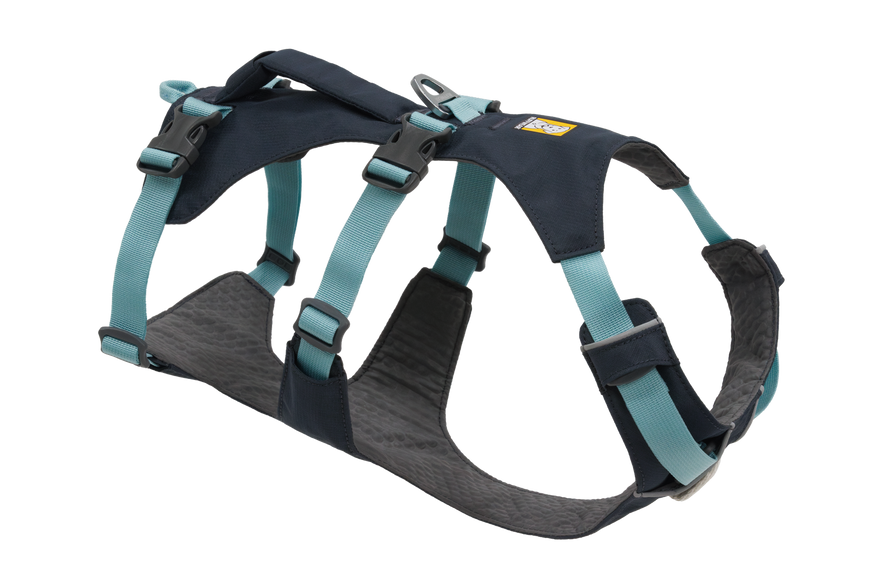
$69.99Ruffwear Flagline Harness: Sizing, Specs & Alternatives
A lightweight, low-profile harness built for dogs that move fast and cover ground. Per the manufacturer materials it suits trail running and active day hiking where a snug, unrestrictive fit matters more than heavy lifting support.
Sources & research
Read our research methodology and editorial standards →
- Manufacturer Ruffwear harness sizing and fit guide
- Manufacturer Ruffwear Dog Harnesses Collection