At a glance
- 4 mi round trip
- 600 ft
- Out & back
- Easy
- National Forest
Best July to October. The trail passes into the Norse Peak Wilderness; a Northwest Forest Pass is required to park. Snow lingers at higher sections early in the season.
If you want a low-stress dog hike near Mount Rainier, Greenwater Lakes is the one. The trail follows the Greenwater River through old-growth forest to a pair of basin lakes, and per the Washington Trails Association the first two miles to the lakes are nearly flat — which makes the Greenwater Lakes turnaround a short, easy out-and-back of roughly 4 miles round trip with minimal elevation gain.
The surrounding route continues up to Echo Lake (a much longer, roughly 14-mile round trip with about 1,900 feet of gain), but most dog owners turn around at the lakes for a relaxed half-day.
With your dog
This is a gentle, shaded, water-adjacent hike — ideal in warm weather. Dogs are welcome on leash (the trail passes into the Norse Peak Wilderness within the Mount Baker-Snoqualmie National Forest, where leash rules apply). The river and lakes are a draw, so pack a packable bowl and keep your dog leashed near other hikers.
Getting there
The trailhead is along the Highway 410 corridor near the town of Greenwater, roughly between Enumclaw and Chinook Pass. A Northwest Forest Pass is required to park, and there is a toilet at the trailhead. As with everything in this corridor, plan for July through October once the snow has cleared.
Gear for this hike
Ruffwear
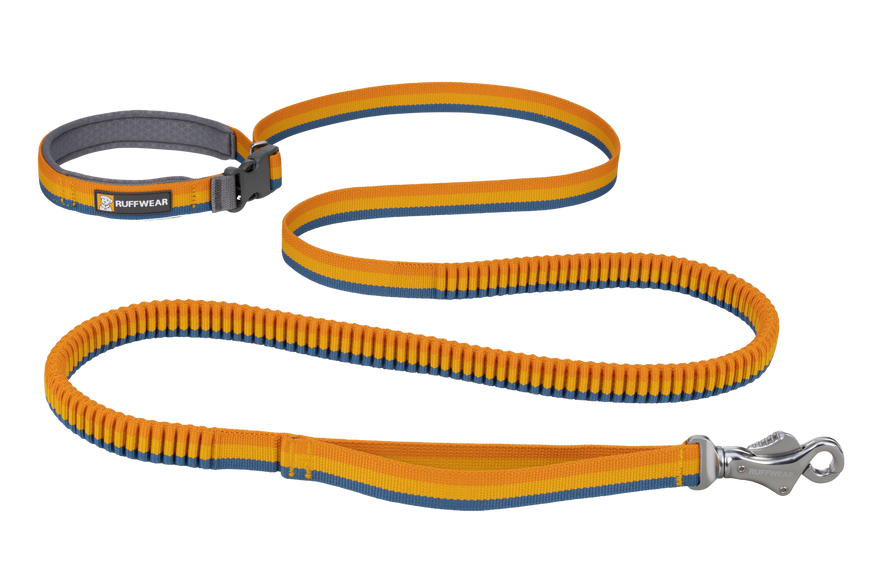
$49.99Ruffwear Roamer Bungee Dog Leash — research review
The Ruffwear Roamer is a 1-inch webbing bungee leash offered in two length ranges that combines Wavelength stretch webbing, a padded adjustable handle with a side‑release buckle, a traffic handle for quick restraint, and an anodized 6061‑T6 aluminum Talon Clip. It’s presented by Ruffwear for running, hiking, hands‑free walking and biking and can be worn at the waist, carried by hand, or looped around a post without unclipping; the waist fit adjusts up to 48 in. The longer 7.3–11 ft option is noted as not ideal for crowded or high‑traffic sidewalks.
Ruffwear
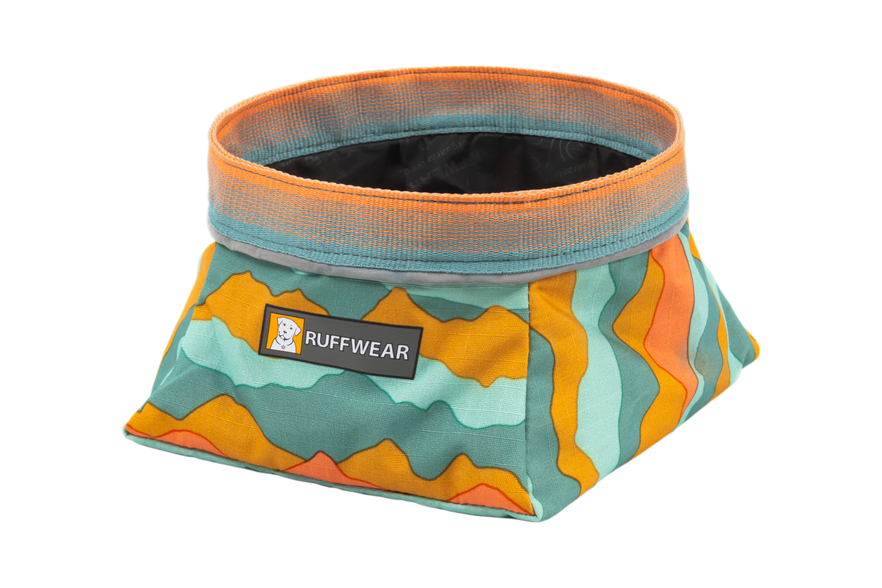
$24.99Ruffwear Quencher Bowl: Sizes, Capacity & Alternatives
The Ruffwear Quencher Packable Dog Bowl is a collapsible square bowl designed for food and water on the go. It is made from a durable water-resistant shell fabric with a lightweight waterproof lining and includes reflective trim. The Quencher comes in three capacities (Small 0.75 L, Medium 1 L, Large 2.5 L), folds flat for pocket or pack storage, and—because its fabric construction is not rigid—must be held or placed on level ground to maintain shape. Ruffwear provides a limited warranty against defects in materials and workmanship.
Ruffwear
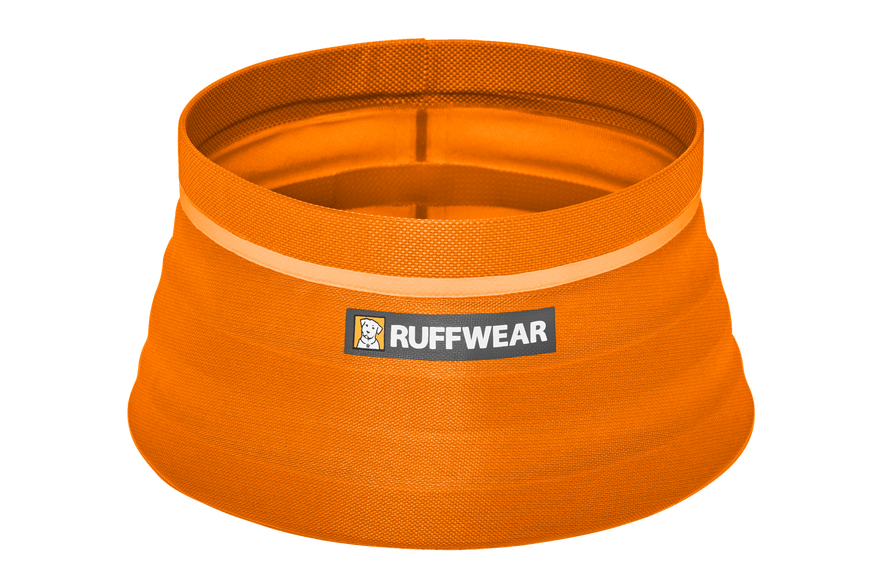
$34.99Ruffwear Bivy Collapsible Dog Bowl — Research Review
The Ruffwear Bivy is a single-size (1.5 L) collapsible bowl designed for portable feeding and hydration during outdoor adventures. It uses a welded durable fabric (not silicone) intended to create a watertight seal, has a non-slip bottom, and—according to the Amazon listing—stays open while in use and folds flat for transport. The product carries Ruffwear’s limited warranty against defects in materials and workmanship.
Related
Sources & research
Read our research methodology and editorial standards →
- Trail reference Greenwater and Echo Lakes