$17.99
Best suited for
- Day hikes and travel where you want one stainless bottle that serves both you and the dog
- Owners who prefer pouring into a bowl over tilting a bottle into the dog's mouth
Poor fit for
- Owners who want a squeeze-bottle roller-ball style dispenser instead of a separate bowl
Pros
- Stainless steel construction is durable and keeps water cool longer than plastic
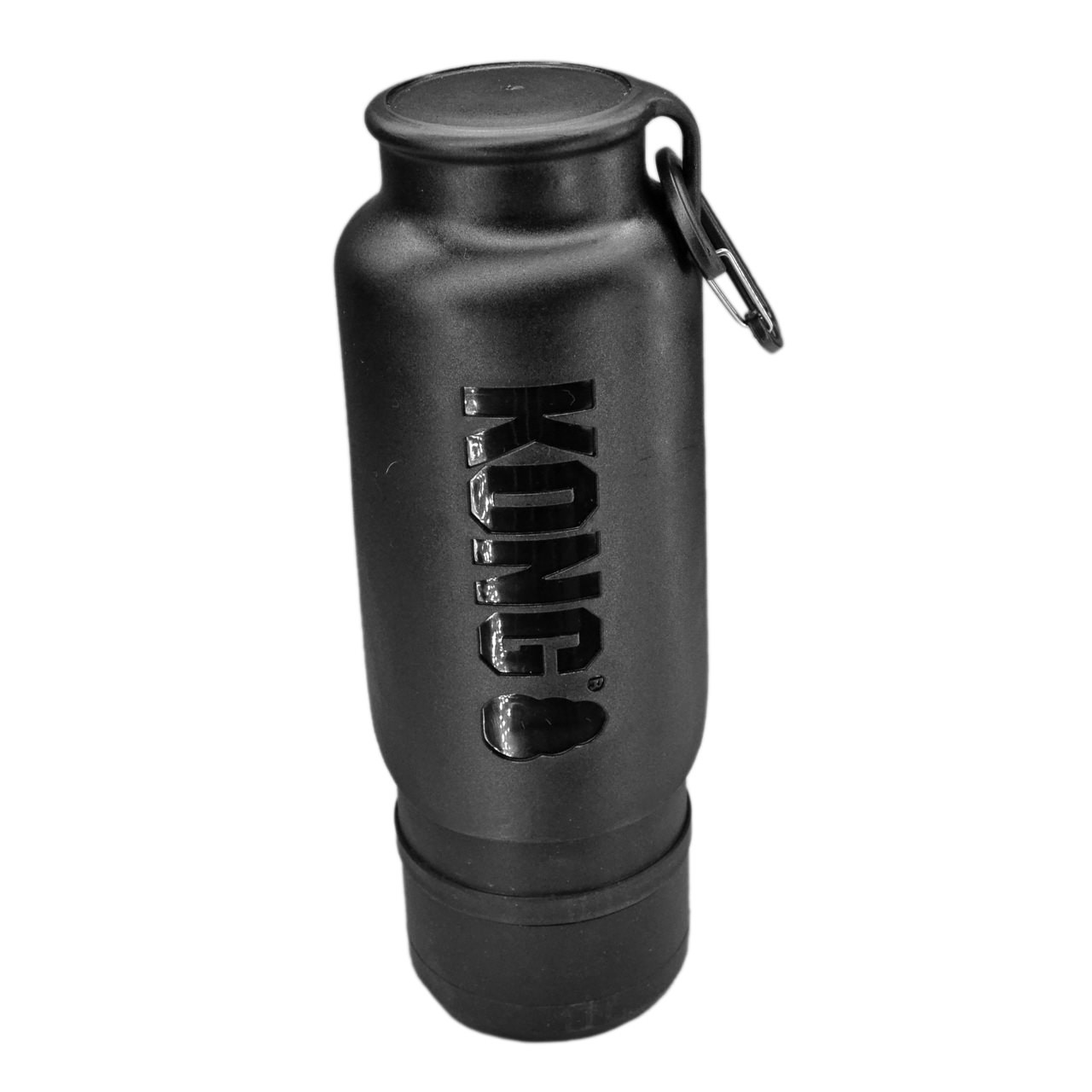
- Screw-on lid doubles as an ~8 oz drinking bowl shaped for dogs, per H2O4K9
- Single bottle for handler and dog on a day hike
Cons
- A two-piece lid-bowl means a part to keep track of, unlike a one-piece squeeze bottle
- Heavier than a collapsible silicone bowl used with a separate bottle
The mechanic is the whole product: the screw-on lid comes off and becomes the dog’s bowl. You pour from the 25 oz stainless bottle into the ~8 oz lid, the dog drinks from something shaped for a dog rather than a tilted human bottle, and you drink from the bottle itself. One vessel, two drinkers, and stainless steel that keeps water cooler than plastic through a day hike.
The tradeoffs are the flip side of the design. The lid-bowl is a separate piece, so it is one more thing to keep track of at a trailhead; a one-piece squeeze bottle cannot lose a lid. It is also heavier than the bowl-plus-bottle-you-already-own approach — this is the pick for people who want the single-object system, not the lightest kit.
H2O4K9 positions it for day hikes, travel, and outings where one bottle serves handler and dog. A note on sourcing for this page: distributor and retailer listings are the primary documentation, with no single authoritative manufacturer spec sheet, so our confidence is a notch lower than on manufacturer-primary pages — the numbers above (~25 oz bottle, ~8 oz bowl) are consistent across the listings we checked.
Verified specifications
- H2O4K9
- Water Bottle
- Stainless steel bottle, Screw-on lid that doubles as a drinking bowl
- ~25 oz (700 ml) stainless bottle; lid/bowl holds ~8 oz
Sizing & compatibility
Fit depends on your dog's measurements. Measure girth (the widest part of the ribcage) and consult the manufacturer's size chart before buying — a poor fit can cause chafing or let an escape-prone dog back out of the harness.